

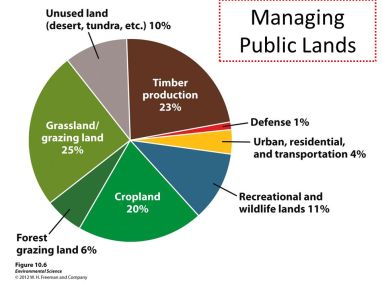
Public lands are all around us, particularly in the west. Figure 1 below maps out the “public lands” available in the united states, and Figure 2 presents the uses of those lands by percentage.
Figure 1
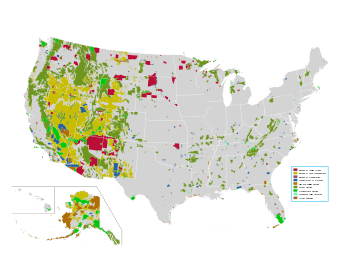
Figure 2
Public lands is defined as “the public domain, unappropriated land belonging to the federal government that is subject to sale or other disposal under general laws and is not reserved for any particular governmental or public purpose.” from legal-dictionary.thefreedictionary.com. Basically, it’s just the land that’s federally owned. These lands are often a subject of politics- for instance, the debate about Bears Ears National Monument boundaries being shrunk. Particularly for residents of Utah as well as other western states, public lands are a prominent topic because they make up so much of the place we call our home.
An interesting question about public lands is posed in the article “How 1,600 People Went Missing from Our Public Lands Without a Trace” by Jon Billman. Throughout, he tells the story of a young student named Joe Keller, and the story of his disappearance in a national park and the process of searching for him. In other chunks of the article, Billman speculates why people go missing and details how the process of searching for them desperately needs amended.
I think there are a few important questions to ponder about this information and about the data released by the BLM and National Park Services: why is nothing being done about all of these missing people? Why aren’t we hearing about this? What are the possible motives?
David Paulides—founder of the CanAm Missing Project and author of Missing 411 Hunters: Unexplained Disappearances— is quoted in the article. “He believes the Park Service in particular knows exactly how many people are missing but won’t release the information for fear that the sheer numbers—and the ways in which people went missing—would shock the public so badly that visitor numbers would go down.” The article accounts for 1600 “missing people” as a conservative figure- there’s hundreds if not thousands of people missing on public lands, often having their bodies only to be recovered months and years later, if ever recovered at all.
The article also details the legal aspects of missing persons, and what that entails. Billman writes “‘There are no federal standards for terrestrial search and rescue,’ Koester says. ‘Very few states have standards. A missing person is a local problem. It’s a historical institution from when the sheriff was the only organized government.’ And when it comes to the locals riding to your rescue, Koester says, ‘There’s a vast spectrum of capability.’” This would highlight another possible agenda for the federal government and NPS withholding information on the missing people within the realm of their areas- there’s no legal sanctions requiring that they report it. Therefore, if, as Paulides speculates, they withhold information for fear that the number of visitors would decrease, it would make sense. They’re not only federally funded lands, but receive financial resources from tourism for both the parks and communities. Search efforts are local, according to old-time law as noted in the previous quote.
There’s the economical argument for the withholding of information- the cost to benefit ratio seems to suggest that it makes more sense. However, that does not consider the ethics. Is it morally correct to withhold from millions of people the real risk of becoming a missing person while visiting national parks? Although still a very low number, the economic thinking behind not releasing this data seems to reflect the general attitude of America as whole. By looking at the motives behind why certain data is released and why some is not, we might be able to build a better idea of American people’s intentions with data and key reasoning behind their use of it.
References
- Billman, Jon. “How 1,600 People Disappeared on Our Public Lands.” Outside Online, 21 Feb. 2019, http://www.outsideonline.com/2164446/leave-no-trace.
- “Public Land.” Wikipedia, Wikimedia Foundation, 8 Feb. 2019, en.wikipedia.org/wiki/Public_land.
- “Public Lands.” The Free Dictionary, Farlex, legal-dictionary.thefreedictionary.com/Public+Lands.
 Data/Society/Decision-making Spring 2019